
Goldman Sachs has materially lowered its earnings growth forecast for Indian companies by a cumulative 9 percentage points over the next two years.

Boeing projects Southeast Asian airlines will require 4,985 new commercial aircraft by 2045 due to expanding fleets and replacements. The region's air passenger traffic is expected to grow 6.7% annually, outpacing economic growth, driven by rising incomes, tourism, and connectivity. Most new aircraft will be single-aisle, with a significant portion supporting fleet growth.

Indian benchmark indices Sensex and Nifty surged significantly in early trade, driven by a sharp decline in crude oil prices and optimism surrounding a potential resolution to the West Asia conflict following the US midterm elections, which saw the Democratic Party gain control of Congress. Track Sensex, Nifty on November 5, 2026.

Indian benchmark equity indices, Sensex and Nifty, experienced a decline in early trade, primarily due to a sell-off in IT stocks and growing concerns over potential interest rate hikes by the US Federal Reserve. Track, Sensex, Nifty on November 19, 2026.

Indian equity benchmark indices Sensex and Nifty slumped in early trade, ending a three-day rally, as profit-taking combined with concerns over surging retail inflation, which breached the Reserve Bank of India's upper tolerance limit, leading to anticipation of a policy rate hike. Track Sensex, Nifty on November 13.

Indian equity benchmarks Sensex and Nifty rallied up to 1 per cent in early trade, driven by strong performance in IT stocks, Reliance Industries, and favourable global market sentiment, rebounding from previous losses.

Indian equity benchmark indices Sensex and Nifty rallied in early trade, driven by sustained foreign fund inflows and a drop in crude oil prices. Foreign Institutional Investors (FIIs) have made a significant comeback, pumping in Rs 84,290 crore into Indian equities in the first fortnight of November.

Analysts predict that the Indian stock market's direction in the upcoming holiday-shortened week will be primarily influenced by foreign investor activity, crude oil prices, and broader global economic trends, with significant FPI inflows already observed.

Keep enough cash for near-term needs so that a bear phase doesn't force you to sell equities at unfavourable prices.
Indian benchmark equity indices, Sensex and Nifty, rallied for a second consecutive day, driven by sustained foreign fund inflows and significant buying in IT stocks. Despite global uncertainties and proposed US tariffs, investor optimism prevailed, pushing key indices higher.

Bentley Motors expects India to become one of its 10 largest markets globally within the next five years, driven by lower import duties under the India-UK free trade agreement (FTA) and a growing base of wealthy consumers, according to CEO Frank-Steffen Walliser.

Indian benchmark equity indices, Sensex and Nifty, opened higher, driven by sustained foreign fund inflows and a significant drop in crude oil prices, even as global markets faced a downturn. Track Sensex, Nifty on November 17.
Indian benchmark equity indices, Sensex and Nifty, experienced a decline in early trade due to elevated crude oil prices, ongoing geopolitical uncertainties, and investor caution ahead of the US Federal Reserve's policy decision later this week. Track Sensex, Nifty on October 26.

Indian stock markets are set to be influenced this week by a confluence of factors including quarterly corporate earnings, the US Federal Reserve's interest rate decision, fluctuations in crude oil prices, and ongoing geopolitical developments in West Asia.

The Indian banking system has experienced a liquidity deficit for the first time in five months, primarily due to GST outflows and the Reserve Bank of India's foreign exchange market interventions.

Zoho Corporation has paused annual pay hikes and reduced marketing expenditure, citing a four-fold increase in server prices for AI infrastructure and an uncertain software sector outlook, according to founder Sridhar Vembu.

Indian benchmark indices, Sensex and Nifty, experienced declines in early trade due to persistently high crude oil prices and significant selling pressure in IT stocks, with global factors like US bond yields and upcoming Federal Reserve decisions also contributing to cautious investor sentiment. Track Sensex, Nifty on October 27.

Embraer, the Brazilian aerospace firm, forecasts a demand for 2,520 aircraft with up to 150 seats in the Asia Pacific region over the next two decades. Excluding China, this figure stands at 1,050 jets. The company highlights the region's significant upgrade opportunities due to its large turboprop fleet and growing need for regional connectivity, driven by intra-regional trade and evolving economic environments.

Electric passenger vehicle registrations in India surged by nearly 75 per cent year-on-year in October, significantly cushioning the 14.6 per cent contraction in the overall passenger vehicle market. This growth was particularly beneficial for manufacturers like Tata Motors and Mahindra, whose EV sales helped offset sharper declines in conventional internal combustion engine (ICE) vehicle registrations.

Indian stock market benchmark indices Sensex and Nifty rallied significantly in early trade, driven by robust foreign fund inflows, better-than-expected Q2 results, and a sustained moderation in crude oil prices. The 30-share BSE Sensex jumped 1,097.33 points, while the 50-share NSE Nifty rallied 274.30 points. Track Sensex, Nifty on November 11.

Honda Motorcycle and Scooter India has maintained its position as the top-selling player in the retail two-wheeler market for the fourth consecutive month in October, intensifying its challenge to long-time leader Hero MotoCorp. This consistent performance, driven by strong scooter sales and shifting market dynamics, has significantly narrowed the gap between the two giants, with Honda now clearly establishing itself as a formidable contender for the market leader slot in the coming years.

Indian equity markets, represented by the Sensex and Nifty 50, concluded Samvat 2082 with significant weekly gains, marking their strongest performance in nearly six years, despite it being their weakest Samvat in 15 years overall. The late recovery was driven by hopes of tax changes, resilient corporate earnings, and easing geopolitical tensions.

Indian benchmark indices Sensex and Nifty opened higher, extending gains from the previous session, driven by a rally in global markets and a slight cooling in crude oil prices. Optimism around a potential meeting between US and Iranian presidents also contributed to positive sentiment.Later both indices pared gains and were trading in red. Track Sensex, Nifty on September 22.
Indian benchmark indices Sensex and Nifty closed lower, snapping a three-day rally, as retail inflation surged to 6.09 per cent in October, breaching the RBI's upper tolerance limit and prompting economists to anticipate a policy rate hike next month.

Analysts predict that the Reserve Bank of India's interest rate decision, crude oil prices, and global bond yields will be the primary factors influencing the Indian stock market this week, alongside macroeconomic data and foreign investor activity.
Indian benchmark indices Sensex and Nifty extended their winning streak in early trade, with Sensex jumping 614.66 points and Nifty rallying 149.80 points. This surge is attributed to a sharp correction in crude oil prices, continued foreign fund inflows, and positive Q2 results, creating an ideal environment for the market rally to continue.

Indian benchmark indices Sensex and Nifty experienced a significant drop in early trade, primarily due to a sell-off in IT stocks, a surge in crude oil prices, and investor caution ahead of the US Federal Reserve's policy decision.

UBS analysts indicate that Indian stocks' valuation premium over emerging markets remains high, despite concerns over crude oil prices and tighter monetary policy impacting India's growth outlook. They suggest a potential slowdown in AI capital expenditure and moderation in oil prices could alleviate these pressures.

Analysts predict that crude oil prices and the ongoing US-Iran conflict will be the primary drivers of stock market movements, with investors also closely watching the Jackson Hole symposium for cues on interest rates.
Indian benchmark indices Sensex and Nifty closed higher, driven by a correction in crude oil prices and significant buying interest in blue-chip bank and financial stocks, despite some profit booking after a recent rally.
Indian benchmark indices Sensex and Nifty experienced declines in early trade, influenced by the Reserve Bank of India's (RBI) recent repo rate hike and its signal for continued monetary tightening, coupled with rising crude oil prices and foreign fund outflows. Track Sensex, Nifty on October 8.

A dozen companies, including major players like Jio Platforms and Zetwerk Manufacturing Business, are poised to launch Initial Public Offerings (IPOs) in October, continuing India's strong fundraising momentum in the primary market. These offerings span diverse sectors, reflecting sustained investor interest in businesses with robust growth prospects.
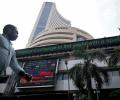
Indian equity benchmarks, the Sensex and Nifty, opened higher on Friday, driven by a strong rally in IT stocks, despite a significant overnight decline in US technology shares and broader Asian markets. Experts anticipate further market support from falling US bond yields, a strengthening rupee, and a substantial liquidity inflow following the Jio Platforms IPO allotment. Track

Foreign portfolio investors (FPIs) withdrew Rs 34,843 crore from Indian equities in October, marking the second consecutive month of heavy outflows due to concerns over crude oil prices, global interest rates, and corporate earnings. However, a notable shift occurred towards the end of the month, with FPIs turning net buyers and infusing approximately Rs 6,300 crore between October 26-30.
Indian benchmark indices Sensex and Nifty rebounded in early trade after two days of losses, driven by easing crude oil prices and strong buying in blue-chip IT stocks, despite continued global uncertainties. Track Sensex, Nifty on September 30.

Indian general insurers are facing significant underwriting pressure due to increased claims from natural catastrophes, particularly floods, leading to higher combined ratios and widening underwriting losses for major players like New India Assurance, ICICI Lombard, and Bajaj General Insurance.
Indian benchmark stock indices, Sensex and Nifty, experienced their worst single-day fall in over four months, with Sensex plunging nearly 1,484 points and Nifty settling below 25,350. Heavy profit booking in financial, banking, and metal shares, coupled with a global sell-off driven by concerns over AI-related valuations and US interest rates, contributed to the sharp decline.

The rupee has so far been the best-performing major Asian currency in November.

Economists anticipate the Reserve Bank of India (RBI) will increase the repo rate by another 50-75 basis points, pushing the terminal rate to 6-6.25 per cent, as retail inflation surpassed the central bank's 6 per cent tolerance limit in October.

India's leading two-wheeler manufacturers, including TVS Motor, Bajaj Auto, and Hero MotoCorp, are preparing for a deceleration in growth during the second half of financial year 2026-27 (H2FY27). This anticipated slowdown is attributed to a high base effect from last year's GST rate cut, inconsistent rural demand, and a growing disparity between premium and entry-level segments.
